


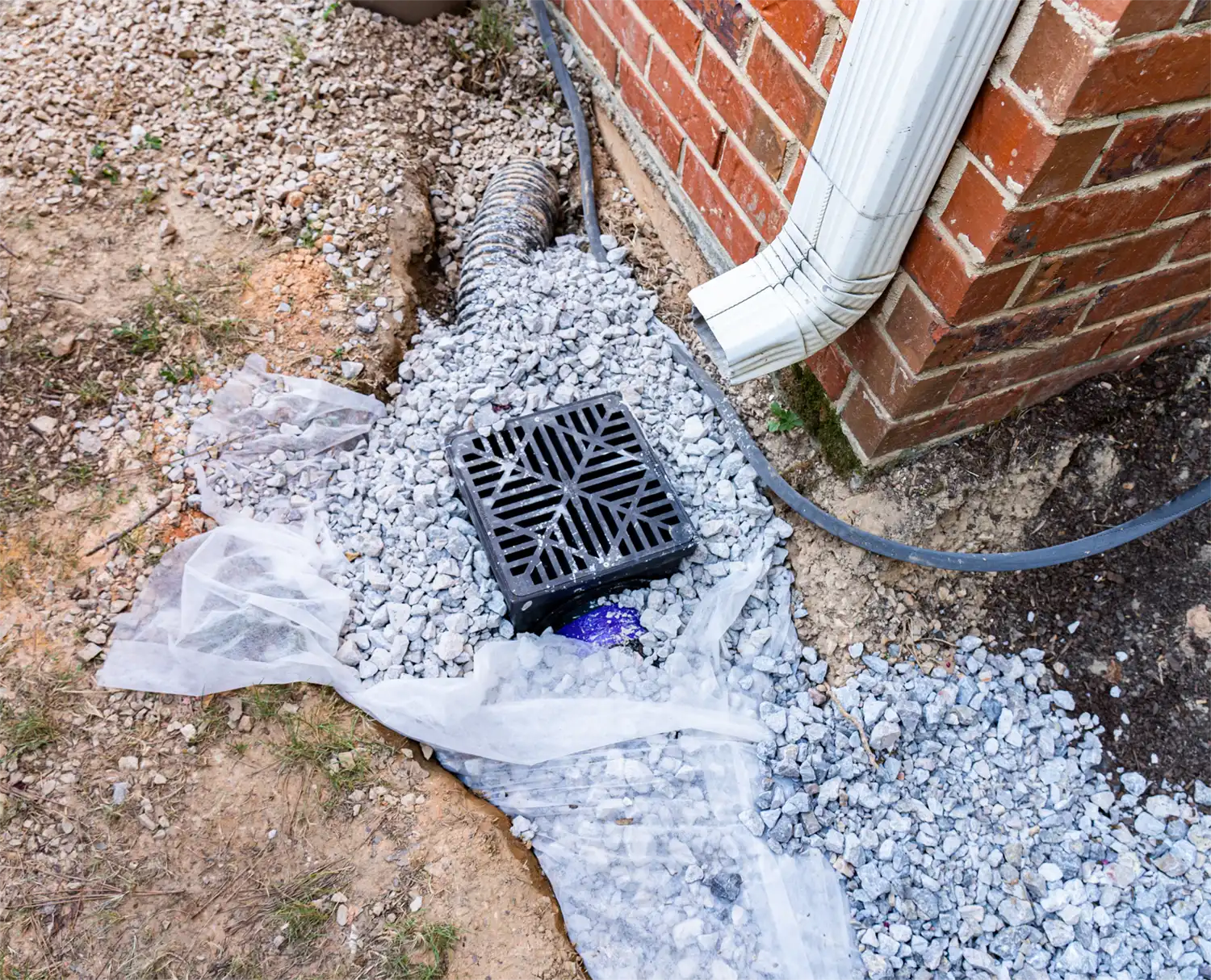
Every inch of rain on a 2,000-square-foot roof sends roughly 1,250 gallons toward your gutters. All of that water has to land somewhere, and it often lands right beside your home.
So when you notice water pooling at the end of your downspout, your foundation may pay the price. Before the next Tampa Bay downpour rolls in, call Sunrise Drainage for a professional drainage assessment!
Common Causes of Water Pooling at the End of Your Downspout
Most of these problems start small, often with a clogged gutter or a short downspout. Once water leaves the spout, it follows the path of least resistance. If that path dips toward your house, the water collects deeper with every storm. Before long, a shallow dip becomes a pond.
Here in Tampa Bay, sandy Florida soil adds another twist. Many neighborhoods also sit on flat lots with little natural slope. Although sand drains quickly, heavy rain can wash it away and carve low spots. Over time, those low spots hold standing water instead of moving it along.
Then summer arrives, and afternoon thunderstorms test every gutter on the block. Often, the first sign of trouble is a soggy patch that never quite dries. By August, that patch may stretch along the whole side of your house.
Common Culprits:
- Clogged gutters that overflow and dump water right beside the foundation
- Downspouts that end only a foot or two from the house
- Missing, cracked, or shifted splash blocks and downspout extensions
- Soil or pavers that slope toward the house instead of away from it
- Eroded low spots carved out by repeated summer storms
Spotting these signs early saves you from bigger repairs down the road.
Pooling Water Puts Your Foundation at Risk
Many Florida homes sit on a slab. That concrete rests on compacted soil, and pooling water soaks it again and again. As a result, the base below slowly weakens. Eventually, the slab can shift as the soil beneath it settles.
At first, the damage hides in plain sight. Then hairline cracks creep across the slab edge, and stucco starts to stain. Sometimes, interior doors begin to stick as the house settles unevenly.
Plus, constant moisture against your walls invites mold and mildew inside. In the end, a simple puddle can turn into a costly structural repair. Picture a crack you ignored in spring that widens by fall. Fixing the water first costs far less than repairing the slab later.
Foundation Warning Signs:
- Hairline cracks along the slab edge near the downspout
- Dark water stains or peeling paint on lower stucco walls
- Interior doors or windows that suddenly stick or will not latch
- Musty odors in rooms that share a wall with the downspout
If you see these signs, schedule a drainage inspection with Sunrise Drainage soon.
Downspout Runoff Erodes Your Yard and Walkways
Water from your roof hits the ground with surprising force. Every storm, it digs a little deeper into the soil below your downspout. Over time, that small scar can stretch across your entire side yard.
Soon, mulch washes away, and bare patches spread across your lawn. Even sod near the spout can drown, yellow, and die. Instead of a lush lawn, you get a muddy strip that tracks indoors. Meanwhile, the soil under nearby walkways and pavers slowly washes out.
Then those pavers rock, sink, or separate underfoot. Naturally, that uneven surface creates trip hazards for kids, guests, and anyone carrying groceries. Concrete and paver repairs can also cost far more than the fix that prevents them.
Yard Damage to Watch For:
- Narrow erosion channels carved below the downspout
- Mulch and soil washed onto sidewalks or the driveway
- Yellow, soggy, or dead grass that never fully recovers
- Pavers that rock, shift, or sit lower than their neighbors
Catching these warning signs early keeps small repairs from becoming costly projects.
Standing Water Invites Mosquitoes and Mildew
Florida mosquitoes need very little standing water to breed. In fact, a shallow puddle can produce a new generation in roughly a week. Some species even lay eggs in a cup of water. Then the adults drift toward the nearest warm body, which is usually you.
That soggy spot by the house sits only steps from your patio. So while you relax outside on a warm evening, the next swarm may be hatching nearby. Clearly, nobody enjoys an evening outdoors spent swatting at bites.
Plus, constant moisture breeds mildew and algae on walls, walkways, and screen enclosures. Those slick green patches look dull and make bare feet slip. Over time, they stain pavers too.
Health and Safety Concerns:
- Mosquito bites that cut short evenings on the patio
- Slippery algae growth on pavers, steps, and walkways
- Mildew stains creeping up your lanai screens and walls
- Musty odors that linger around standing water after rainy weeks
A dry, well-drained yard keeps your family safer and more comfortable.

Quick DIY Drainage Fixes Often Fall Short
Of course, a quick extension from the hardware store seems like an easy fix. However, a short extension often moves the puddle a few feet instead of solving it. Also, flimsy extensions crack, clog, or get knocked loose by lawn mowers.
Many drainage specialists recommend sending runoff at least four to six feet from your home. Still, distance alone won’t help if the ground slopes back toward your house. Without proper grading, the water simply finds a new low spot.
Even a well-meant patch can backfire. For example, piling soil against a wall may trap water against your stucco. So instead of saving money, you could end up paying twice for the same problem.
Why DIY Falls Short:
- Short extensions only relocate the puddle a few feet
- Guesswork grading can send water toward a neighbor or back home
- Buried pipes without proper slope fill with silt and stop flowing
- Hidden soil and slab damage often goes undiagnosed
Leave downspout drainage to trained pros who can spot the real cause.
Professional Drainage Solutions Carry Runoff Away
A professional drainage assessment starts with one simple question. Where does the water need to go? From there, a trained technician studies your roof, soil, and slope. They also check where neighboring yards drain onto yours.
Often, the answer is an underground downspout drain. It carries runoff through buried pipe to a pop-up emitter far from your foundation. Then the water spreads gently across your lawn and soaks in.
Sometimes, a yard needs more than one fix. For instance, a French drain or a dry well can handle extra runoff where soil stays soggy. Each option depends on your soil, your slope, and where the water can safely go. Afterward, a good technician explains the plan in plain words before any digging starts.
Professional Drainage Options:
- Underground downspout drains that hide runoff below the lawn
- Pop-up emitters that release water far from your foundation
- French drains that collect and redirect soggy-yard runoff
- Dry wells that hold heavy runoff while it soaks into the soil
- Regrading so your yard slopes away from the house
Call Sunrise Drainage to find the right drainage solution for your home.
Stop Water Pooling at the End of Your Downspout for Good
Water pooling at the end of your downspout may look harmless, yet it quietly wears down your home. Still, you never have to tackle the fallout alone. Sunrise Drainage serves homeowners across Hillsborough, Pinellas, Pasco, Manatee, and Sarasota Counties. So call today to schedule an assessment and keep your yard dry, safe, and storm-ready!
