


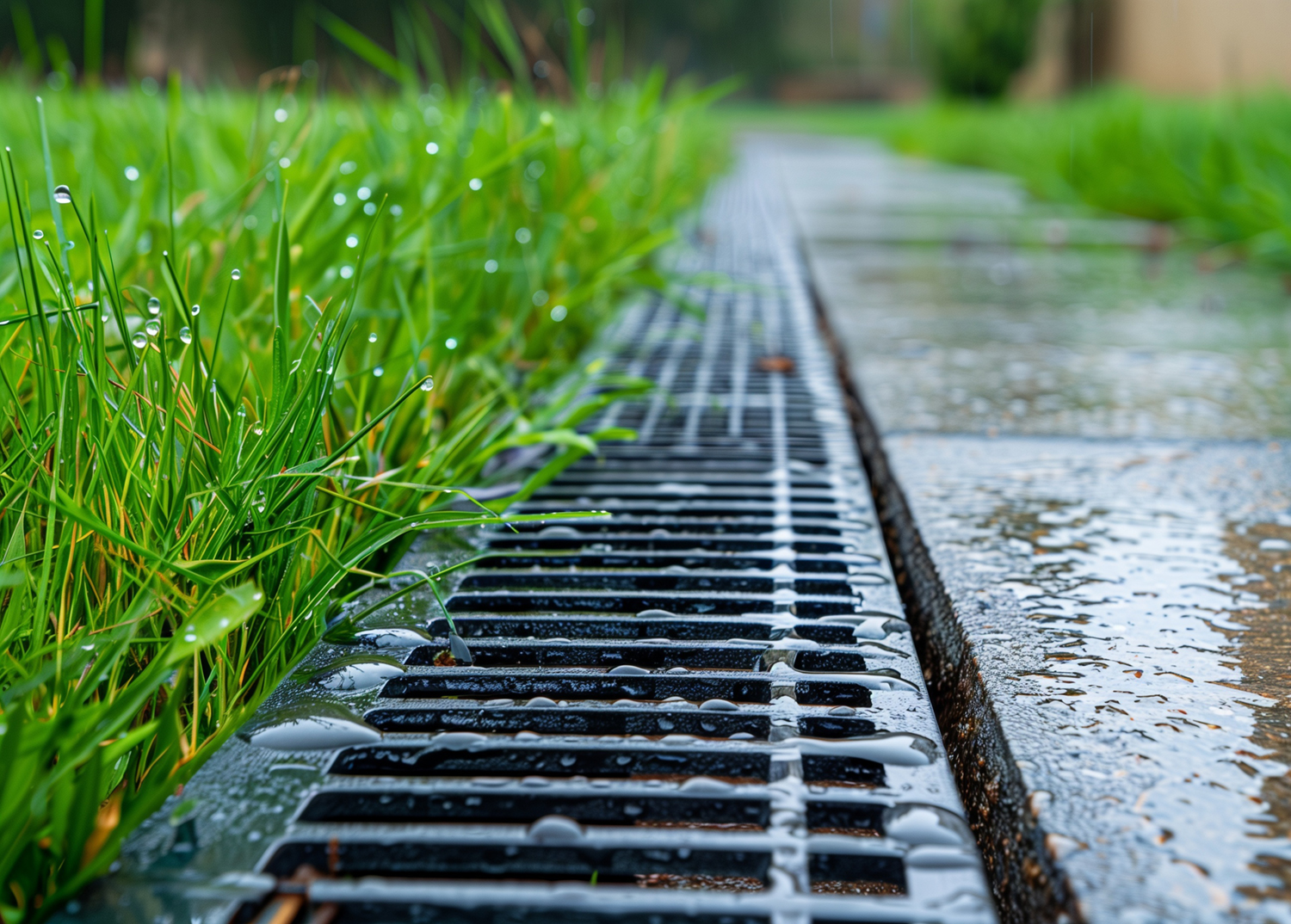
Every Florida yard hides a quiet network of pipes, basins, and slopes that carry rain away. After a hurricane, your yard drainage system has handled more water in hours than in weeks. Some parts may come through clogged, crushed, or knocked out of place. So before the next storm arrives, call Sunrise Drainage for a thorough post-storm inspection across Tampa Bay.
Standing Water Shows Where Your Yard Drainage System Struggles
Once the rain stops, your yard starts telling a story. Watch where water gathers, then note how long it stays put. A healthy yard drainage system clears most puddles within a day or two. Pay close attention to low corners, patios, and walkways.
If pools linger past 48 hours, something below the surface likely needs attention. For example, a soggy strip along the driveway often points to a blocked drain line. Plus, standing water near the foundation deserves a much faster response.
Here in Tampa Bay, flat terrain and a high water table slow natural runoff to a crawl. So even small drainage failures can leave your lawn swampy for days. Snap a few photos now. Later, those images help a technician trace where the water came from and where it stalled.
Warning Signs to Watch For:
- Puddles that remain more than 48 hours after the storm ends
- Soggy, spongy turf in spots that normally stay firm
- Water lines or silt stains along your home’s foundation
- Mosquito activity near low, shaded corners of the yard
Call Sunrise Drainage to find the source of lingering standing water today.
Clear Debris From Every Drain Inlet
Hurricane winds send leaves, palm fronds, mulch, and sand straight into your drains. Because these inlets sit at ground level, they clog fast. Just one blocked catch basin can back water across an entire side yard. Soon, that water finds the lowest point, which is often your patio or garage.
Of course, surface debris is only half the problem. Sand and silt often wash deeper into the drain pipes below, where nobody can see them. When that sediment settles, it hardens. Over time, it narrows the path water needs to escape.
Also, check the pop-up emitters at the end of each drain line. Storm debris can jam them shut, forcing water back upstream toward your home. Gently lift each cap to confirm it moves freely.
What to Inspect at Each Inlet:
- Catch basin grates covered with leaves, fronds, or loose mulch
- Sand buildup inside basin boxes after heavy runoff
- Pop-up emitters stuck closed or buried under debris
- Cracked or shifted grates from falling limbs
Let Sunrise Drainage clear and flush your drain lines before the next storm.
Gutters and Downspouts Feed Your Yard Drainage System
Your roof can shed thousands of gallons during a single hurricane. All of it travels through gutters and downspouts first. If those connections fail, water dumps right beside your foundation, and the soil there softens quickly.
Walk the perimeter and follow each downspout to where it ends. Often, wind knocks extensions loose. Sometimes, falling branches crush the flexible pipe that carries water underground. Usually, nobody notices until the next heavy rain arrives.
Then, look for splash blocks that moved or disappeared entirely. Without them, concentrated water can carve deep trenches beside your walls. Those trenches invite even more water toward the slab.
Downspout Checkpoints:
- Extensions that detached, cracked, or blew into the yard
- Crushed corrugated pipe where debris landed on it
- Buried downspout connections that no longer drain freely
- Gutters overflowing because leaves packed the downspout opening
Schedule a downspout and gutter inspection with Sunrise Drainage now.
Underground Drains Hide the Costliest Damage
French drains and buried pipes work out of sight, so storm damage is easy to miss. While the surface may look fine, pipes below can be crushed or packed with silt. Uprooted trees are a common culprit. Here in Florida, saturated sand can also slump into perforated pipe and choke the flow.
When a large tree topples, its root ball can lift and snap nearby drain lines in seconds. Even heavy equipment from cleanup crews can crack shallow pipe. Unfortunately, that damage stays hidden until water starts backing up.
How can you tell? Watch for new wet spots, small depressions in the soil, or outlets that barely trickle during rain. Yet only a professional inspection can confirm what happened inside the pipe. Instead of guessing, let trained eyes find the break.
Signs of Hidden Pipe Damage:
- New soggy areas above a buried drain line
- Small depressions or sunken soil along the pipe route
- Outlets that release little water after a heavy rain
- Gurgling or slow drainage from nearby inlets
Book a professional inspection with Sunrise Drainage to see what lies below.

Erosion and Grading Changes Reshape Water Flow
Florida’s sandy soil moves easily under heavy rain. After a hurricane, you may notice ruts, washed-out beds, or bare patches. Those changes quietly redirect water where it never used to go. In fact, one storm can shift inches of sandy soil in a single afternoon.
For instance, a yard that once sloped away from your home may now tilt toward it. Swales between houses can also fill with sand and debris. Naturally, water then spreads into neighboring lawns. Worse, it may pool against your slab.
Proper grading keeps your yard drainage system working as one connected whole. So restoring the slope is often the first, smartest step toward drainage that lasts for years. It also protects the pipes and basins you already paid for.
Grading Red Flags:
- Channels or ruts carved by fast-moving runoff
- Exposed tree roots or sprinkler heads from soil washout
- Swales partly filled with sand, mulch, or storm debris
- Soil that now slopes back toward your foundation
Ask Sunrise Drainage about regrading options that restore healthy water flow.
Professional Inspections Beat Risky DIY Checks
It’s tempting to grab a shovel and start digging the morning after a storm. But post-hurricane yards hold real hazards, from downed lines to contaminated floodwater. Snakes and fire ants also seek higher ground after flooding, and both can hide under debris. Broken glass and nails often lurk in soggy grass, too.
Plus, guesswork often costs more in the long run. Replacing the wrong section of pipe wastes a weekend and your money. Worse, a missed crack can flood the same spot next time. Then you pay twice for one problem.
A trained drainage technician knows where to look. Better yet, they know how to test each component without tearing up your lawn. As a result, repairs target the true cause instead of the symptoms.
Advantages of a Professional Inspection:
- Safe evaluation of storm-damaged areas and hidden hazards
- Accurate diagnosis of clogs, breaks, and grading problems
- Repair plans matched to Tampa Bay soil and rainfall patterns
- A clear picture of your drainage system before the next storm
Trust Sunrise Drainage to handle the hard work safely and correctly!
Schedule Your Yard Drainage System Inspection Today
Hurricane season runs through November 30, so more storms may still be on the way. Now is the ideal time to repair any damage your yard drainage system took on. Sunrise Drainage proudly serves homeowners across Hillsborough, Pinellas, Pasco, Manatee, and Sarasota Counties. Call today, and let our local team get your yard ready for whatever comes next!

